
Professor Karl-Werner Schulte is one of the most renowned academics in real estate economics research and is considered the “father” of real estate economics.
His work has been recognized with numerous awards and honorary memberships worldwide. The professor of real estate economics at the International Real Estate Business School (IREBS) of the University of Regensburg has also been involved in Africa for many years. AIZ spoke to him about this.
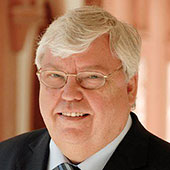
Prof. Dr. Karl-Werner Schulte
Interview von Heiko Senebald
``Africa is not a continent for only rational-thinking people``
AIZ – Das Immobilienmagazin | IVD, April 2021
AIZ: Professor Schulte, was there a trigger for your involvement in Africa?
As the new president of the International Real Estate Society (IRES), I attended the annual conferences of our regional affiliates every year, starting in 2000. That’s how I came to attend the African Real Estate Society conference in Arusha, Tanzania, at that time. That was my first ever encounter with Africa. The conference made an impression on me, because it was different from all other conferences. It was much more lively, emotional, passionate, and without the usual formality. I was tremendously impressed by the commitment with which people from both academic and industry discussed things with each other there.
You then fell completely in love with the continent?
Indeed, I love Africa. I have traveled to 25 countries in Africa so far. Not just because of the conferences, but because the people and nature inspire me. I’m also a big fan of the polar regions. But I really like Africa as well, because I feel I can make a difference there – especially with regard to my field of real estate economics.
Are there any regions that particularly excite you?
Yes, East Africa. Especially Kenya, Tanzania, Rwanda and Uganda. This is also where I have the best relationships with universities and many private friends. I was often in these countries, because I worked on behalf of the government at two universities. My job for four or five years was to observe and monitor the development of the real estate programs at the universities and make suggestions for improvement.
You have given real estate a new meaning in many African countries through your involvement. Is there so much catching up to do?
Yes. Only a professionally positioned real estate industry can contribute to the development of national economies in Africa. And unfortunately, it is not yet doing so in most countries. This is where real estate economics education and research can make an important contribution. We only need to look at Germany to see how important the real estate industry is here, or in England and the USA. The professionalization of the real estate industry can only be achieved through teaching and research.
And that’s why you set up the foundation to take on this task – the professionalization of the real estate industry in Africa?
Yes, ten years ago. The non-profit foundation “IREBS Foundation for African Real Estate Research” supports African universities in the development of real estate degrees, as well as doctoral and master’s students. The background is quite simple to explain. The very first thing we need to do is to establish and initiate degree programs, train academics, and advance the relevant research in order to professionalize the real estate industry in the first place.
To achieve all this, the foundation supports various activities. For example, we pay tuition fees for outstanding students who want to pursue master’s programs at African and European universities. The master’s degree has a different meaning in Africa than in Germany. Almost all students go into business or public service after completing their bachelor’s degree. Only those who want to pursue an academic career proceed to a master’s degree, because for that, they need a master’s degree and a doctorate. We assume that master’s students, whom we support, will stay at universities, then go on to do their doctorate and continue their careers until they become professors. That’s why we’re starting nice and early to support students with tuition.
What other support options are there?
It is important to us that the young researchers are able to present their research at conferences in Africa and later in Europe. We therefore also fund travel grants. Traveling within and between countries of Africa costs an incredible amount of money and effort.
Another project: Young academics in Africa find it extremely difficult to get their research published in the traditional, high-profile journals. So we needed a journal that deals specifically with African real estate issues. The Foundation is funding just such a journal for African Real Estate Research.
We also fund several awards, one for the best papers presented at the African Real Estate Society’s annual conferences, one for excellence by African women in academia and industry, and one for the best ideas for creating affordable housing.
What are the challenges in Africa regarding the rental housing market and homeownership?
There is a regulated market and an unregulated market. Most Africans live in housing markets that have more or less sprung up, both uncontrolled and unregulated. Africans, by their nature, don’t like rental housing; they are actually into homeownership. The main problem here is financing. Very few countries have mortgage loans, and where they do exist, they are very restrictive. Let’s take Ghana as an example. A developer of apartments can only get financing of 30 to 40 percent of the construction sum, once half of the apartments have been sold. Interest rates are horrendous: currently about 12 percent for USD loans, 22 percent in local currency. Apartment buyers pay about half of the purchase price within the first year, regardless of construction progress. It is obvious that with such a financial construct, a project can quickly collapse, developers will go bankrupt, and buyers will lose their money.
Europeans barely invest in Africa…
…which in my eyes is primarily due to the political uncertainty in most African countries. Before elections, people often promise more democracy and less corruption. In the course of their term in office, however, the election winners often move in the opposite direction. However, I would like to take up the case for Africa. Unfortunately, the media usually only report on Africa when something bad has happened. The positive aspects remain in the background. There is a lot to do in Africa and there are exciting markets also for Europeans.
The topic of infrastructure, for example, is currently only being tackled by the Chinese. The Chinese are building airports, bridges and other transportation networks in Africa, because the Europeans are tend to be reluctant to make the move to Africa.
Which sectors do you still consider particularly exciting?
There is a lot of demand for all types of real estate. For example, the office market. There are an incredible number of companies that want to gain a foothold in Africa – after all, we’re talking about 54 countries in Africa. But the companies can’t find adequate office space in most cities.
Another issue is shopping malls, for example. Traditional shopping in Africa takes place at street markets. However, there are now more than 350 million people who can be described as middle class in Africa. They no longer have any desire for street markets. Much of this middle class flew to Dubai to shop before the Corona crisis. Emirates flew to 25 cities in Africa. That means there is a need for retail and shopping centers with very different structures.
When was the last time you were there?
In the summer of 2019 in Arusha, Tanzania at the African Real Estate Society conference. As part of that, I was on a Real Estate Tour for Professionals with 15 real estate practitioners. I very much hope that the conference will be held again this year in Lusaka, Zambia. I plan to travel privately to Mozambique and Malawi afterwards.
Your enthusiasm for Africa is clear.
I am involved because I am wholeheartedly attached to Africa. I feel at home there. Africa is not a continent for people who think in purely rational economic terms.
Is there anything you are particularly proud of?
I am proud of my two very first students from Tanzania, who studied at the University of Regensburg for three and a half years, and whose doctoral theses I supervised. Both went back to their home university. Moses got a call one day from the president of the country. He first became minister for all state affairs and later head of the state chancellery. Sophia now heads the largest real estate company in Tanzania. Both continue to lecture at the university. And they are married to each other!